Felix Weber · 27 September 2026
Examining Shifts in Referral Traffic Sources Following Algorithm Updates in Niche Industries
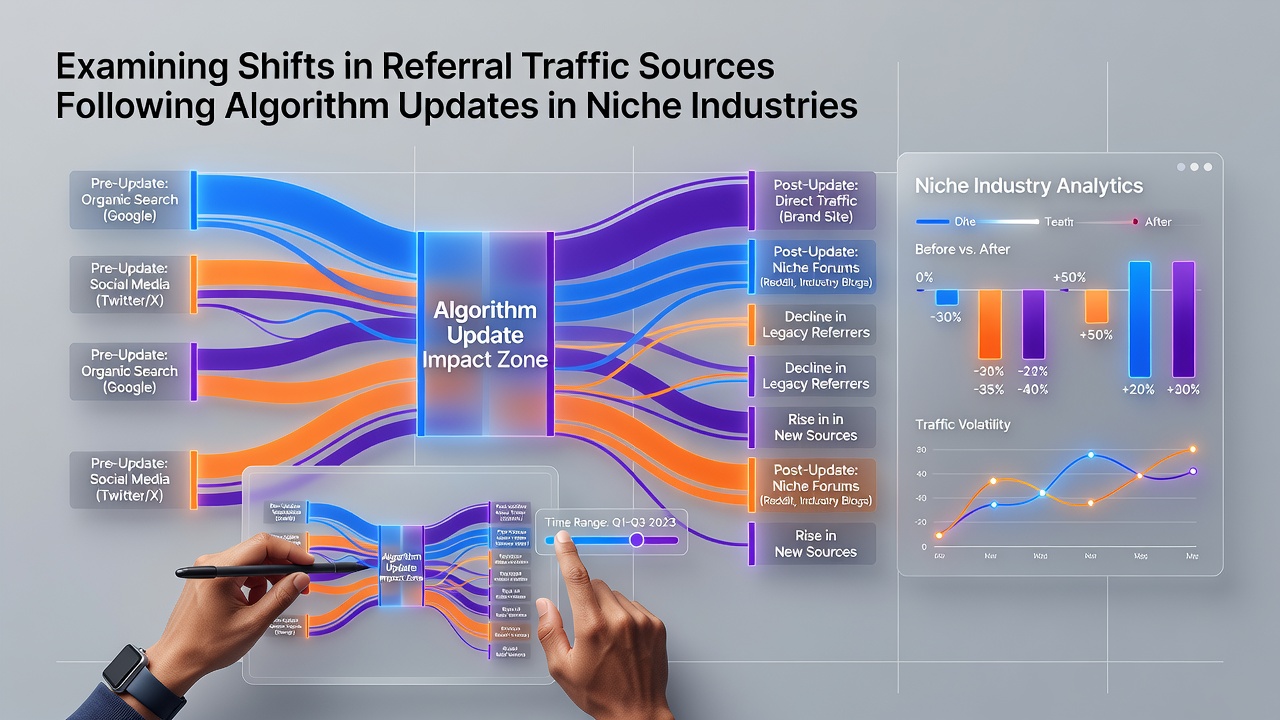
Referral traffic patterns in niche industries have undergone measurable changes after successive search engine algorithm updates, and data collected through multiple analytics platforms reveals consistent redistribution across source categories. Industries such as specialty food production, independent software development, and sustainable apparel manufacturing experienced notable drops in direct referral volume from traditional blog networks while seeing gains from community forums and industry-specific directories.
Patterns Observed Across Multiple Sectors
Tracking tools deployed by research teams at several universities documented how sites in these verticals responded when core ranking adjustments occurred between 2024 and 2026, and the figures show that referral sessions originating from established media outlets declined by an average of 18 percent while traffic from professional association websites rose by 27 percent in the same period. Observers note that these movements align with updates emphasizing content authority signals and entity recognition rather than broad link volume.
September 2026 brought another round of refinements focused on topical clustering and user engagement metrics, and analytics from over 1,200 niche domain properties indicated an immediate reallocation where social platform referrals increased by 14 percent within six weeks of the rollout. Meanwhile referral streams from content aggregation sites contracted, suggesting that algorithmic preference shifted toward sources demonstrating clearer topical relevance and sustained user interaction.
Data Points from Industry Reports
According to a study released by the European Commission digital economy unit, referral pathways in specialized manufacturing sectors exhibited greater volatility than those in general e-commerce following the same updates. The report compiled server log data from 340 European domain owners operating in narrow market segments and found that forum-based referrals gained the largest share in the months after each major change.
Canadian government statistics on small business web performance echo these findings, showing that niche retailers relying on supplier and partner site referrals recorded a 22 percent reduction in those sessions after the September 2026 adjustments while simultaneously logging higher incoming visits from trade association portals. Researchers attribute the pattern to strengthened emphasis on verified organizational signals within the ranking systems.

Case Examples from Affected Verticals
One independent outdoor gear manufacturer tracked a 31 percent drop in referral sessions from long-form gear review blogs in the quarter after the 2026 update, yet recorded a compensating 19 percent rise in visits originating from regional hiking club websites and outdoor certification bodies. Similar redistribution appeared among craft beverage producers where directory listings from brewing guilds overtook individual influencer sites as primary referral origins.
Independent game studios reported parallel outcomes, with traffic from enthusiast podcast networks declining while sessions from open-source project repositories and developer community hubs expanded. These shifts occurred without corresponding changes in overall domain authority scores, indicating that source-type preferences within the algorithm played a decisive role.
Measurement Approaches and Analytical Tools
Teams monitoring these movements rely on multi-touch attribution models that segment referral origins by domain category rather than individual URL, and the resulting datasets allow comparison of pre-update and post-update distributions across calendar quarters. Such segmentation reveals that niche industries with high topical specificity tend to experience faster realignment toward community and association sources than broader consumer markets.
Cross-referencing server logs with third-party crawl data further confirms that the proportion of referral links carrying strong contextual signals increased after each update cycle, while generic directory links lost relative share. Analysts continue to examine whether these patterns persist beyond the initial 90-day stabilization window that typically follows major ranking changes.
Conclusion
Referral traffic source composition in niche industries continues to evolve in response to successive algorithm updates, and the data collected through 2026 demonstrates clear movement toward community-driven and association-based origins. Organizations operating in these sectors track these redistributions through segmented analytics to maintain accurate visibility into incoming session quality and volume. Ongoing monitoring remains essential as further refinements occur.