Blake Hansen · 25 October 2026
How Specialized Community Platforms Adapt Their Internal Analytics Frameworks When Scaling User Interactions Across Decentralized Networks
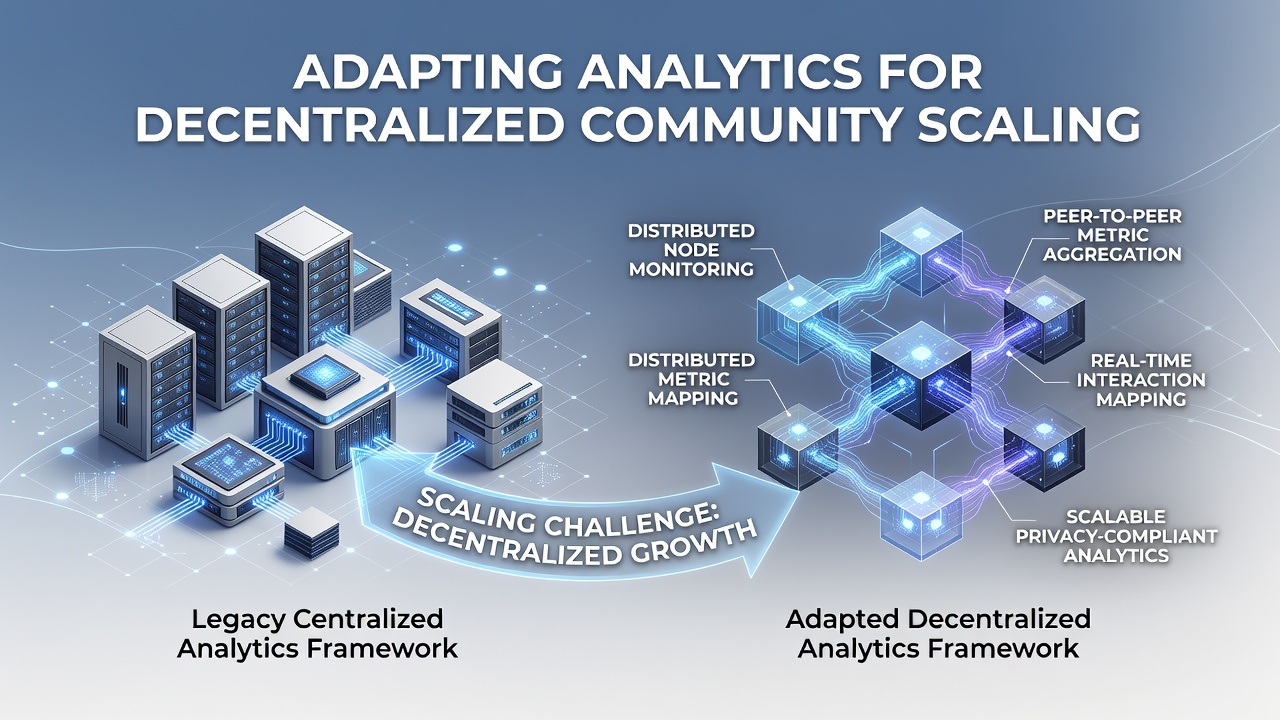
Specialized community platforms face distinct pressures when user interactions move from centralized servers into decentralized networks, and their analytics frameworks must evolve accordingly to maintain performance and data integrity. These adaptations often involve shifting from monolithic data pipelines toward modular systems that can process inputs from peer-to-peer nodes without creating single points of failure. Observers note that platforms handling niche interest groups, such as open-source developer communities or regional hobbyist networks, encounter rapid spikes in interaction volume once decentralization takes hold, which forces internal teams to redesign how metrics are collected, aggregated, and interpreted.
Core Challenges in Decentralized Scaling
Data arrives from distributed sources that lack uniform timestamps or consistent formatting, and this heterogeneity requires new ingestion layers capable of reconciling conflicting records in real time. Research indicates that platforms must incorporate consensus mechanisms similar to those used in distributed ledger technologies, yet tailored for analytics rather than financial transactions. In October 2026, several mid-sized community operators reported deploying edge-based preprocessing nodes that filter and normalize interaction logs before they reach central repositories, a step that reduced latency by measurable margins according to internal benchmarks shared at industry forums.
Privacy constraints add another layer of complexity because decentralized networks often operate across multiple jurisdictions with differing data protection rules. Those who manage these systems have observed that user consent signals must travel alongside the interaction data itself, prompting the creation of metadata schemas that tag each event with its origin jurisdiction and retention policy. This approach prevents downstream processing from violating regulations while still allowing aggregated insights to emerge from the combined dataset.
Framework Adaptation Techniques
Engineers typically begin by replacing batch-oriented reporting tools with streaming architectures that handle continuous flows of micro-interactions. These architectures rely on publish-subscribe patterns where each network node can contribute events without waiting for a central coordinator. Data shows that such changes allow platforms to maintain query responsiveness even when daily active interactions increase by factors of ten or more within short periods.
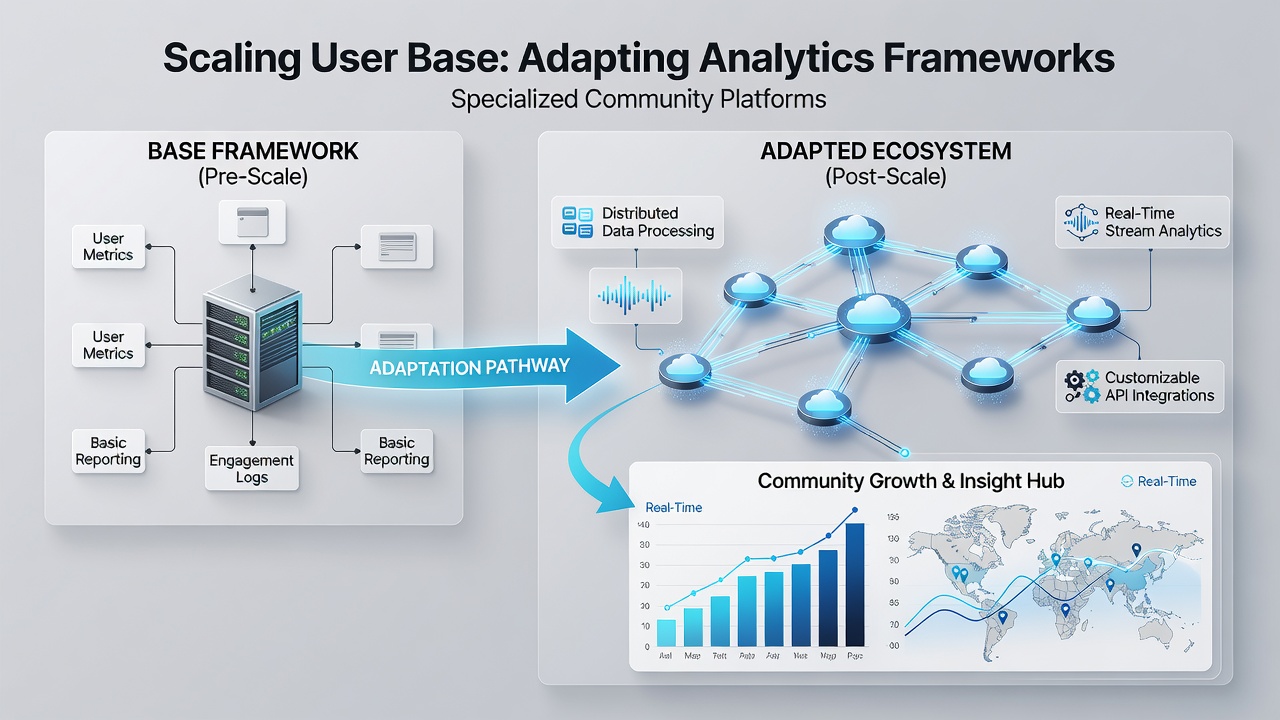
Modular plugin systems have become common because they let teams add new metric types without rebuilding the entire framework. One documented case involved a platform supporting distributed art collaboration groups that introduced plugins for tracking versioned asset contributions across nodes; the addition took weeks rather than months once the core framework supported dynamic extension. Experts have observed that this flexibility proves especially valuable when communities experiment with novel interaction modes such as real-time co-editing or location-aware check-ins that only make sense in decentralized contexts.
Integration with External Data Sources
Platforms also integrate external signals from protocol-level telemetry provided by the underlying decentralized infrastructure. According to findings from a OECD study on digital infrastructure, organizations that align their internal analytics with protocol-native metrics achieve faster detection of anomalous interaction patterns. This alignment requires careful mapping between low-level network events and higher-level community behaviors, a task that often involves collaboration between protocol developers and platform analysts.
Security considerations influence framework design because decentralized environments expand the attack surface for data tampering. Teams therefore embed cryptographic verification steps at multiple points in the analytics pipeline, ensuring that aggregated reports remain trustworthy even if individual nodes are compromised. Figures from a NIST guidance document highlight that verification overhead remains manageable when implemented through lightweight hash chains rather than full re-encryption of every record.
Operational Adjustments and Monitoring
Operational teams shift their monitoring focus from server uptime toward node health and network partition resilience. Dashboards now surface metrics such as message propagation delay and replica consistency across geographic clusters, metrics that were irrelevant in centralized setups. People managing these systems report that alerting thresholds must be recalibrated frequently because baseline behavior changes as the network grows and new node operators join.
Training for analysts also evolves to include familiarity with distributed systems concepts. Workshops organized by community platform operators in late 2026 emphasized practical exercises in tracing interaction flows across simulated node failures, helping staff understand how partial data loss affects downstream conclusions. Such preparation reduces the time required to diagnose and correct framework issues when real incidents occur.
Conclusion
Specialized community platforms continue refining their analytics frameworks as decentralized networks mature, focusing on modularity, privacy-aware ingestion, and protocol-level integration. These changes support reliable measurement of user interactions even as network topology shifts and participant numbers fluctuate. Continued documentation of adaptation patterns will likely inform future platform designs seeking to balance insight generation with the inherent constraints of distributed environments.