Blake Vogel · 11 October 2026
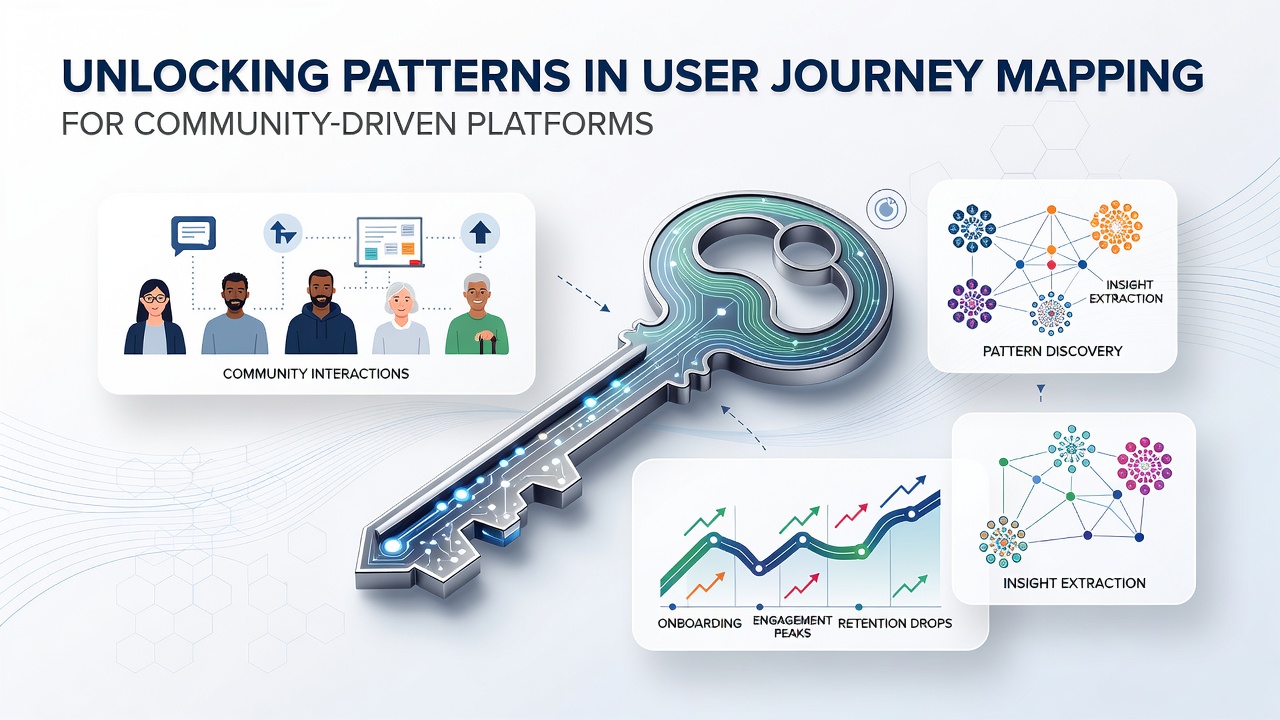
Unlocking Patterns in User Journey Mapping for Community-Driven Platforms
Community-driven platforms rely on structured user journey mapping to reveal recurring behaviors across forums, social networks, and collaborative spaces, where individuals move from initial discovery through sustained participation and eventual contribution or departure. Researchers track these sequences using data logs that capture click paths, dwell times, and interaction frequencies, allowing analysts to segment users into cohorts based on activity clusters rather than isolated events.
Core Elements of Journey Mapping in Community Contexts
Mapping begins with identification of touchpoints such as registration flows, content discovery feeds, and notification triggers, while subsequent stages incorporate qualitative signals from comment threads and upvote patterns that indicate deepening involvement. Data shows that entry points often cluster around search referrals or direct invitations, and these early interactions set the trajectory for retention metrics tracked over multi-week periods. Observers note that platforms benefit when maps incorporate both linear progressions and branching loops, since users frequently cycle back to earlier stages after achieving milestones like earning moderator status or joining subgroups.
Patterns emerge when longitudinal datasets align registration timestamps with first-post dates and subsequent reply volumes, revealing that users who complete an initial action within 48 hours demonstrate higher long-term activity rates according to aggregated platform analytics. Those who've studied community dynamics find that geographic and demographic variables influence these timelines, with certain regions showing accelerated progression when localized language support appears during onboarding.
Recognizing Recurring Behavioral Sequences
One common sequence starts with passive browsing that transitions into profile customization, followed by selective commenting that escalates to thread creation, and this progression appears consistently across multiple platform types when heatmaps overlay session recordings. Another pattern involves rapid onboarding followed by dormancy periods interrupted by targeted notifications, which researchers have quantified through survival analysis techniques applied to user cohorts. In October 2026, aggregated reports from international digital infrastructure studies highlighted how these sequences vary by platform scale, noting that smaller communities exhibit tighter feedback loops between actions and responses compared with larger networks.
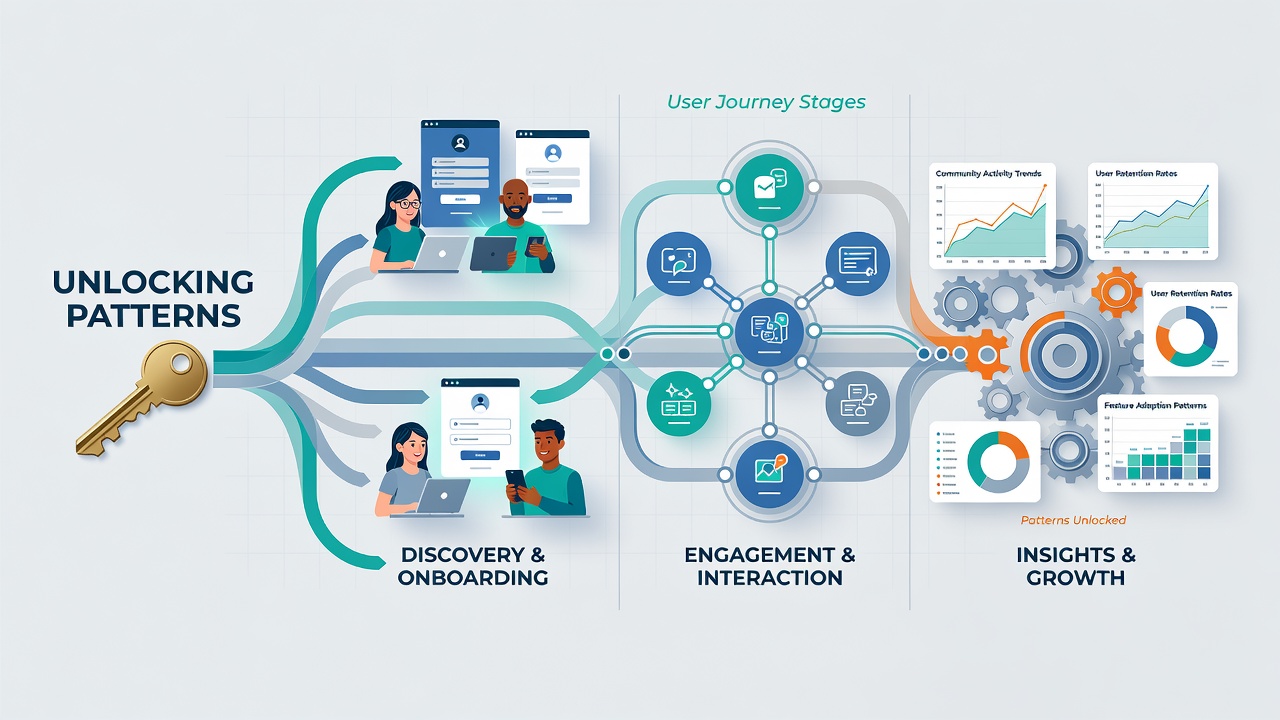
Analysts cross-reference these observations with engagement graphs that plot contribution frequency against network centrality scores, uncovering clusters where high-centrality users accelerate journey progression for peripheral members through mentorship behaviors. Evidence from academic repositories indicates that such amplification effects strengthen when mapping tools integrate social graph data alongside temporal activity logs.
Analytical Approaches and Supporting Technologies
Sequence mining algorithms process event streams to detect frequent subsequences, while visualization layers render Sankey diagrams that connect stages with proportional flow widths derived from actual user volumes. Platforms apply clustering methods to group similar journeys, enabling segmentation that informs interface adjustments without requiring manual review of every path. Data from research institutions across North America and Europe shows that integration of these techniques reduces time spent on manual pattern identification by consolidating raw logs into interpretable stages.
External validation comes from sources such as Pew Research Center analyses of digital community participation, which supply baseline metrics on interaction frequencies, alongside reports from the OECD digital economy outlook series that contextualize cross-border platform usage patterns. These references allow teams to benchmark internal findings against broader population trends while maintaining focus on platform-specific variables.
Implementation Considerations Across Platform Types
Moderation systems interact directly with journey stages when flagged content alters visibility for subsequent users, creating conditional branches that mapping exercises must account for through scenario testing. Privacy protocols further constrain data granularity, requiring aggregation methods that preserve pattern detection while limiting individual traceability. Those who've examined implementation records observe that phased rollouts, beginning with core navigation flows and expanding to notification sequences, produce more stable insights than comprehensive initial deployments.
Case examples include open-source collaboration sites where commit histories map onto discussion threads, revealing that contributors who engage in issue tracking before code submission maintain longer participation windows. Similar structures appear in hobbyist forums, where resource-sharing posts serve as gateways to sustained membership when recommendation engines surface relevant prior threads at the right moment in the sequence.
Conclusion
Effective pattern recognition in user journey mapping for community-driven platforms rests on systematic collection of interaction data, application of sequence analysis methods, and integration of external benchmarks to contextualize internal observations. Continued refinement of these approaches supports platform operators in aligning interface elements with documented behavioral flows across diverse user segments and temporal scales.